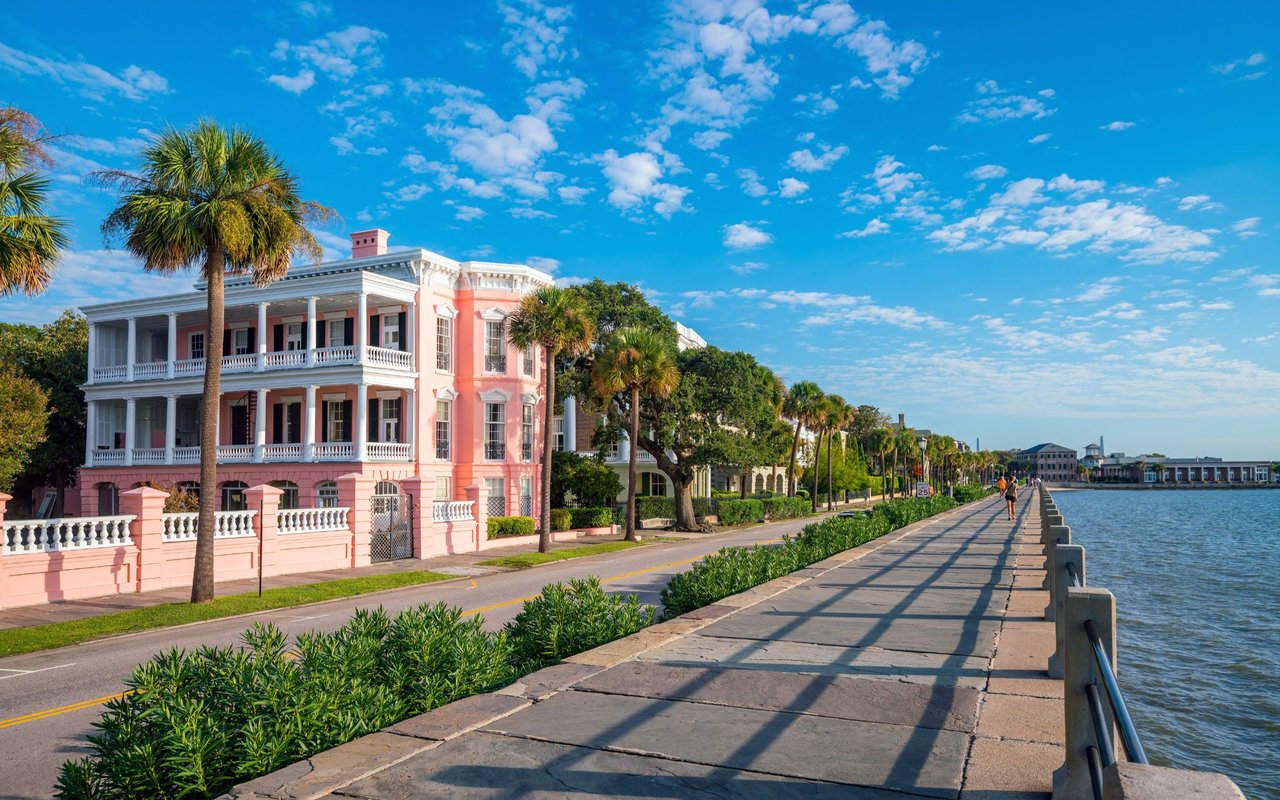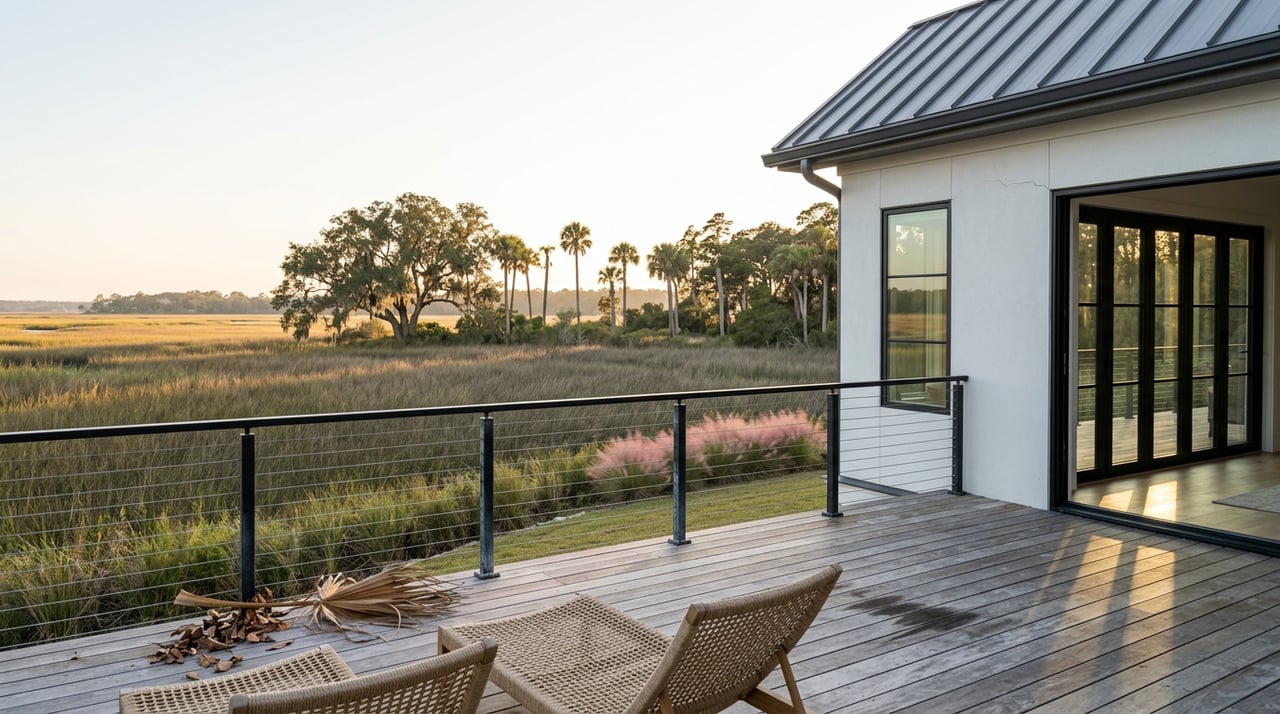
Every waterfront listing in Mount Pleasant photographs the dock like it belongs to the house. It sits in the same gallery as the kitchen and the primary suite, priced into the same number, described in the same paragraph as the water views. It isn't included the way a refrigerator is included. A private dock in South Carolina's coastal critical areas has its own paperwork trail, its own expiration date, and its own transfer process that has nothing to do with a deed changing hands at closing.
That distinction matters more this year than it did two years ago. The agency that issues the permit changed its name. The town added a second layer of review this spring. And the physical rule that decides whether a creek can legally carry a dock at all has nothing to do with what a seller is asking for the house. Here is what actually governs whether the dock in the listing photos is yours to use, and what to confirm before you write an offer on waterfront property in Mount Pleasant.
Not All Waterfront Is the Same Kind of Waterfront
Mount Pleasant sells "waterfront" as a single category, but the water behind the house determines what you can legally do with it, and that's set by regulation, not by marketing. The South Carolina Department of Environmental Services, which took over coastal permitting from the old DHEC-OCRM office, measures creek width from marsh grass to marsh grass. Creeks narrower than 20 feet cannot carry a private dock at all, unless the property has at least 500 feet of frontage or there's no competing dock access from the opposite bank.
That single rule explains a lot of the price spread inside Mount Pleasant's waterfront market:
- Deepwater access. Homes on the Wando River in neighborhoods like Hobcaw Point can maintain six feet or more at low tide, enough for a private dock to function as a real boat slip rather than a seasonal kayak launch.
- Tidal creek access. Communities like Hobcaw Creek Plantation and the Molasses Creek area sit on narrower, tidal waterways. A dock may still be buildable, but usability depends on tide timing and the creek-width math above.
- Marsh view without navigable access. Some Old Village and inner Mount Pleasant lots border marsh that never qualifies for a dock under the width rule, no matter how the listing photographs the view.
None of this is visible from a listing photo. It's visible from a creek-width measurement and a look at what the state has already permitted on that specific parcel, which is why it belongs in due diligence rather than in the description of the view.
The Permit Doesn't Transfer Itself
The South Carolina Department of Environmental Services says a dock permit stays attached to the person who applied for it until someone formally moves it. The state's transfer process requires a specific document, Form D-3900, signed by both the current permit holder and the new owner, and it only works if the permit is still active. An expired permit cannot be extended, and it cannot be transferred either. It has to be applied for again from the start.
There's also a clock running in the background even on a permit that's currently valid. Certified Critical Area Line surveys are only good for up to five years from the date SCDES certifies them, and the underlying construction permit itself has to be completed within five years of issuance unless the holder can show documented progress toward finishing the work.
The rule that should sit at the top of every waterfront closing checklist is simple: an active permit that has never been formally transferred is still the seller's permit, not yours, no matter what the survey shows or what the listing says.
How Public Notice Affects a Dock Permit
Even a permit application that satisfies every state requirement still has to survive a public process, and that process can take longer than the paperwork suggests. The South Carolina Department of Environmental Services says state rules require the applicant to supply mailing addresses for every adjoining property owner so the agency can send a public notice, and to run a separate public notice in a local newspaper, which means neighbors get a formal window to weigh in before a dock permit is finalized.
That window brought public comment in 2024, when nearby residents opposed a proposed 733-foot dock in the Shemwood neighborhood on Shem Creek, who raised the issue at a Mount Pleasant Town Council meeting and argued the project would harm a stretch of creek they use for recreation and view as ecologically sensitive. The dispute didn't hinge on whether the applicant had followed the technical rules. It hinged on the fact that a dock proposal, once it enters public notice, becomes a neighborhood conversation the applicant doesn't fully control. A buyer relying on a seller's promise that "the dock permit is basically approved" is relying on a process that isn't finished until the comment period closes and the agency signs off, not before.
Mount Pleasant Added a Second Reviewer This Spring
Everything above concerns saltwater critical areas, the marsh edge, and the state agency that has handled dock permitting for decades. Mount Pleasant Town Council added a separate layer this year that waterfront buyers now need to check in addition to the state process, not instead of it.
The Post and Courier reports that the 2023 Sackett v. EPA decision removed federal Clean Water Act protection from wetlands that lack a continuous surface connection to a larger body of water, including isolated pockets on private land, the kind that don't touch a creek or marsh but still hold water seasonally. Mount Pleasant's Town Council responded by unanimously adopting a local wetlands ordinance on April 14, 2026, extending town-level review to those isolated, non-jurisdictional freshwater wetlands. The final version requires a vegetated buffer averaging 10 feet around any qualifying wetland, down from the wider buffer first proposed earlier that spring. Citizen Portal reports that the final version replaced an earlier proposal for a notarized affidavit with a simpler property owner disclosure. During the public hearing process, a representative for the Charleston Trident Association of Realtors noted that as much as 9 percent of the town's land area could contain wetlands potentially affected by the new rules.
The practical effect for a waterfront buyer is that a lot can now trigger two entirely separate reviews from two different authorities, and having a clean state dock permit says nothing about the second one:
| What Triggers Review | Authority | What's Required |
|---|---|---|
| Construction at or seaward of the marsh critical line (docks, bulkheads, boat ramps) | SCDES Bureau of Coastal Management | Critical Area Permit, a current certified Critical Area Line survey, notice to adjoining owners |
| An isolated wet area elsewhere on the lot with no surface connection to the marsh | Town of Mount Pleasant, Ordinance 26022 | Owner disclosure, town GIS and field review, a buffer averaging 10 feet |
A property can be fully compliant on one side of this table and completely unreviewed on the other. If the backyard has a low spot the seller has never mentioned because it has nothing to do with the dock, it is worth checking under the new rules.
What This Means If You're Under Contract
Before you write an offer on waterfront property in Mount Pleasant, or before your inspection period closes on one you're already under contract for, it's worth confirming five specific things:
- Ask for the SCDES permit number for the dock and confirm in the state's ePermitting system that it's active, not expired.
- Confirm that Form D-3900 will be signed by both the seller and you at or before closing, so the permit legally moves with the sale.
- If the property sits on a tidal creek rather than true deepwater, measure the creek width marsh grass to marsh grass and check whether the 500-foot frontage exception applies before assuming a dock is buildable at all.
- Ask when the Critical Area Line survey was last certified. If it's approaching or past the five-year mark, budget for a new one.
- Ask whether any portion of the lot, beyond the marsh-facing edge, has been flagged on the town's wetlands mapping under the new ordinance.
None of these are deal-breakers on their own. They're the difference between buying a waterfront home with a dock you can actually use on your own timeline and buying one where the next repair, rebuild, or addition starts with a permitting process the seller never had to finish.
A Few Questions Worth Asking Directly
Does an existing dock automatically come with the house when I buy it? the state permit that allows it to exist does not. It has to be formally transferred using Form D-3900, signed by both the outgoing and incoming owner, and it only transfers if it's still active.
What if the seller never permitted the dock in the first place? Older docks built before current rules or without proper permitting can complicate a sale, since an unpermitted structure has nothing to transfer. This is worth raising directly with the seller's agent during due diligence rather than assuming the dock's existence implies the paperwork exists too.
Does the new wetlands ordinance apply to my lot if it doesn't touch the marsh? Possibly. The ordinance targets isolated, non-jurisdictional freshwater wetlands anywhere on a property, not just marsh-adjacent land, so a backyard low spot with no visible connection to the creek can still qualify for town review.
Waterfront due diligence in Mount Pleasant now runs through two separate offices instead of one, and the price of the home tells you nothing about which permits are current, which ones need renewing, or which parts of the lot have never been reviewed at all. That's the kind of detail worth confirming before an offer goes in, not after.
If you're evaluating a waterfront property in Mount Pleasant or anywhere else in the Charleston area, the team at Rose Gold Properties can help you pull the permit history, check the current Critical Area Line certification, and understand exactly what you're buying before you're locked into a contract.
This article is general information, not legal, tax or financial advice. Consult a qualified professional about your situation.